The Healthspan Brief · Issue 13 · 10 October 2026
Your diet needs an objective, not a label
Before choosing what to cut, decide what you want your nutrition to achieve.
Seven ordinary days of eating: that’s what I’d record before choosing keto, fasting or another diet label.
Start by naming the job. Reducing excess fat while preserving muscle means paying attention to energy intake and protein alongside your training. Eating less may serve one aim. A shorter eating window that leaves you short on protein may work against another.
Before changing the rules, finish this sentence:
“I want my nutrition to help me ___, and I will judge progress by ___.”
Now look at a normal week, including the meals you do not plan carefully. Lunch between meetings and dinner with a customer are part of the record.
Two inputs are worth checking first. First, approximate calories tell you how much you are eating; include drinks, snacks, sauces and restaurant meals. Energy balance still matters, whatever dietary approach you choose. Your log helps you see the intake side. Second, protein intake tells you whether your usual meals support the muscle you want to preserve or build.
Estimate what you are getting before setting calories and protein intake targets. Your activity, body composition and health context matter. Halor’s free beta includes the Nutrition Guide and a protein-and-calorie tracker with rolling averages to help you review your intake. Your physician or dietitian can help decide what level is appropriate for you.
Then choose one lever: how much you eat, what you eat, or when you eat. Planning a substantial protein source at breakfast might address a gap your log reveals. Different food choices might make portions easier to manage. Food quality belongs in the picture too: vegetables, fibre-rich foods, whole fruit and the kinds of fat you use regularly. A calorie number is important but alone will not do the whole job.
Make the change easy to repeat. Decide what lunch looks like when you have fifteen minutes. Keep useful food available before you get home hungry. If a meal goes differently from the plan, return at the next one.
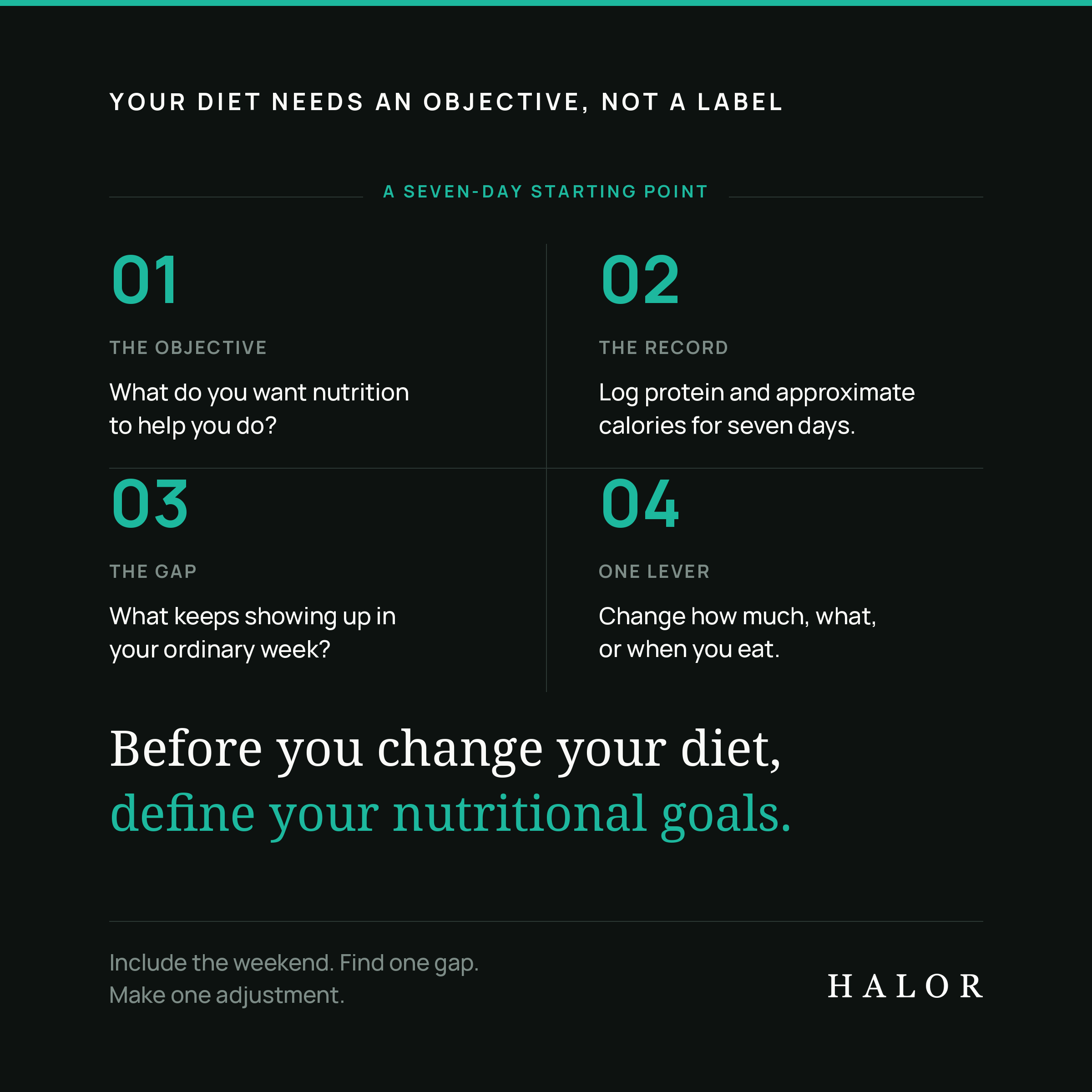
This week’s assignment
Log protein and approximate calories for seven ordinary days, including the weekend. Find one recurring gap, then choose one adjustment.
A week will not prove a health outcome. It will give you a clearer starting point.
You can debate the next diet with better information. First, understand the one you are already eating.
— Ben
P.S. Which meal is hardest to get right during your working week? Reply with breakfast, lunch or dinner.
Was this forwarded to you? Subscribe here → halor.app
Halor publishes educational content about health, healthspan, Medicine 3.0 and longevity. This is not medical advice and does not establish a physician-patient relationship. Always consult a qualified healthcare provider before changing your diet, exercise, supplements, medications, or screening plan. Never disregard professional medical advice, or delay seeking it, because of something you read or used here. Full disclaimer: halor.app/disclaimer.
The Healthspan Brief lands every Saturday. Subscribers get early access to Halor’s free healthspan app and help shape what we build next.
Join the Brief + get beta access